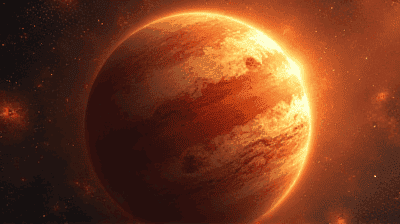
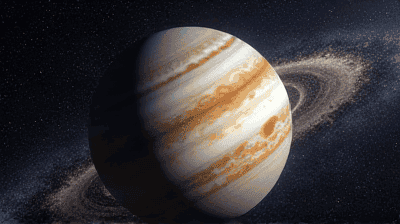
Venus, our closest planetary neighbor, has intrigued humankind for centuries. Often called Earth's twin due to its similar size, composition, and proximity, Venus presents a stark contrast to the world we inhabit.
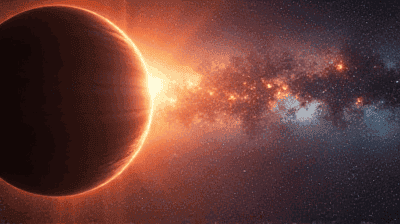
The quest for extraterrestrial life has captivated humanity for millennia. As we evolve in our understanding of the cosmos, we increasingly focus on the search for life beyond our own planet. A major advancement in this pursuit is the recent launch of the James Webb Space Telescope (JWST), designed to study the atmospheres of exoplanets like never before.
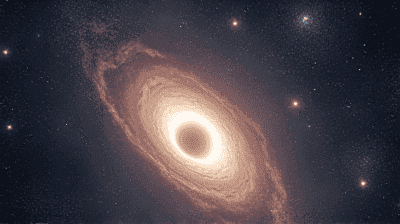
In the realm of theoretical physics and astronomy, the imagination often stretches into the unknown, leading to the development of concepts that challenge our understanding of the universe. Among these fascinating concepts is the idea of white holes, the hypothetical counterparts to black holes.
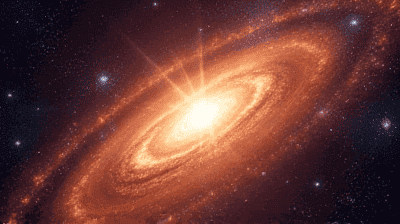
The cosmos is vast and filled with intricate structures, from the smallest galaxies to the largest galaxy clusters. Understanding how these structures form and evolve over time is a fundamental pursuit in cosmology, the study of the universe's origin, evolution, and ultimate fate.
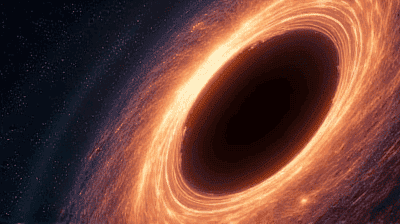
In the vast expanse of the universe, some celestial phenomena shine more brilliantly than others, capturing the attention of astronomers and the public alike. Among the most fascinating of these phenomena are quasars, the extraordinarily luminous cores of distant galaxies powered by supermassive black holes.
The concept of parallel universes, or the multiverse, has long fascinated both scientists and science fiction enthusiasts. The multiverse theory posits that our universe is not the only one; rather, it exists alongside countless other universes, each with its own laws of physics, dimensions, and even histories.
The universe we observe today can be traced back to a moment over 13 billion years ago—a moment known as the Big Bang. This cosmic explosion marked the beginning of space, time, and matter. While the event itself is hidden in the depths of time, the remnants of the Big Bang linger on in the form of the Cosmic Microwave Background (CMB) radiation.
The Moon, Earth's only natural satellite, has captivated humanity for millennia. Its presence has inspired countless myths, legends, and artistic works, playing a crucial role in the cultural and scientific development of civilization.
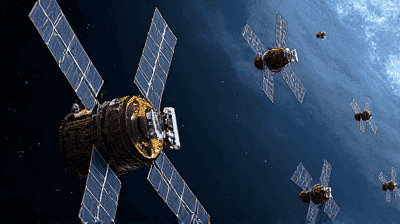
In recent years, the night sky has begun to look different than it ever has before. The proliferation of satellite swarms—groups of satellites operating together for various purposes—has profoundly transformed the field of astronomy and our understanding of the universe.
The Kuiper Belt, a vast region of icy bodies beyond the orbit of Neptune, has long intrigued astronomers and planetary scientists. Home to a diverse collection of objects, including dwarf planets, comets, and potential new worlds, the Kuiper Belt offers a unique window into the early solar system.